.png)


What is 360 Marketing? Complete Guide for Modern Businesses
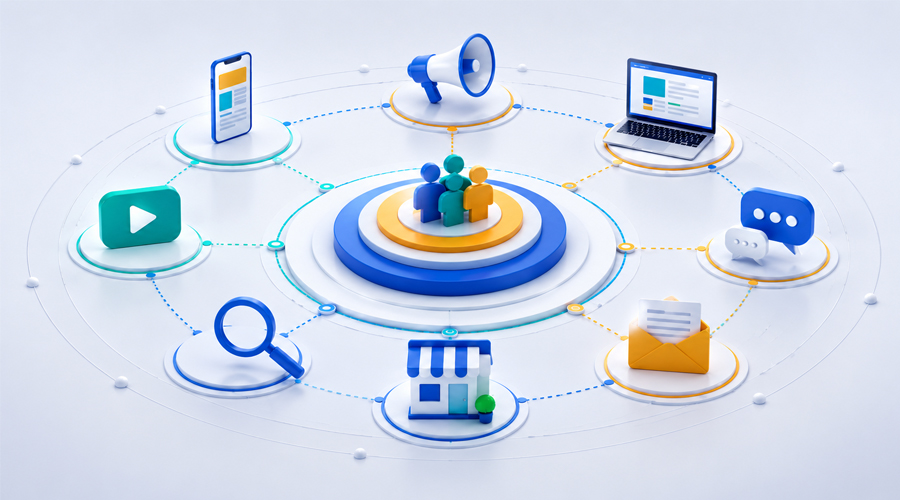
Customers may discover a business through Google, social media, paid ads, or content before making a purchase. If these channels work separately, the brand message can become inconsistent, and the marketing strategy may not deliver the desired results.
A 360 marketing approach connects these touchpoints through one strategy. It helps businesses maintain a consistent customer journey while making different marketing channels work towards the same business goals.
Let’s look at how 360 marketing works, the main benefits, and how it can work for businesses.
What is 360 Marketing?
360 marketing is an integrated approach that brings different marketing channels together under one strategy. Instead of treating SEO, social media, paid advertising, and content as separate activities, businesses integrate them around a common goal and message.
For example, a product launch could include:
- SEO to improve search visibility
- Content to explain the product and answer customer questions
- Social media to build awareness and engagement
- PPC campaigns to reach users with purchase intent
- Email to follow up with existing leads and customers
Although the channels have different purposes, they all contribute to the same customer journey.
How Does 360 Marketing Work?
A 360 marketing strategy brings all the aspects of a customer's journey toward engaging with a business together.
1. Know who your intended audience is
The first step is to understand the type of business you're targeting, its needs, and the way it searches for products or services.
2. Make clear marketing targets
Determine the goals you want for the campaign, such as creating awareness, traffic, leads, sales or customer retention.
3. Connect the proper channels
Choose channels appropriate to the audience and purpose. This may encompass SEO services, PPC campaign administration, social media, e-mail and content marketing.
4. Maintain consistency of message
The tone, placement and message should be consistent from platform to platform. Whether it's a paid advertisement or through Google or Instagram, customers should know the same brand.
5. Monitor and optimise
Track traffic, engagement, leads, conversions and other metrics. Apply these learnings to optimise campaigns and target resources to effective channels.
5 Benefits of 360 Marketing for Businesses
A connected marketing approach can help businesses create a stronger presence across the channels their customers already use.
1. Stronger brand visibility
Customers encounter the brand across multiple touchpoints instead of relying on one channel. Repeated exposure can improve recognition and recall.
2. Consistent customer experience
A consistent message across search, social media, advertising and content gives customers a clearer understanding of the brand and its offering.
3. Improves marketing efficiency
When channels support each other, businesses can use campaign insights and content across different platforms instead of treating every activity as a separate effort.
4. Better lead generation
Content marketing services can bring relevant users to a website or landing page. These users can then move through the buying journey with the help of follow-up campaigns.
5. Helps businesses understand customers
Data from multiple channels gives businesses a broader view of how customers discover, research and interact with the brand.
What Channels are Used in 360 Marketing?
A 360 marketing strategy doesn't mean using every available platform. The right lineup depends on the business, audience, and objectives.
- SEO: It improves organic search visibility and attracts users looking for relevant products or services.
- PPC: PPC campaign management helps businesses reach users through targeted paid campaigns based on search intent, audience characteristics, or other campaign criteria.
- Content marketing: Offers valuable blogs, guides, videos and other information to help drive awareness and purchase decisions.
- Social media: It brings visibility, interaction and continuous communication with the audience.
- Email marketing: These help businesses to develop leads and maintain a connection with existing customers.
What Should Businesses Consider Before Starting?
A 360 marketing strategy needs coordination. Before any business can select the appropriate channels, the first step is to gain an understanding of their audience, establish measurable objectives, and determine the channels that will help them achieve those objectives.
They are also looking for repetition and consistency of brand messages, as well as a way to measure outcomes. Having too many channels for a business without the necessary resources can prove challenging for marketing.
A digital marketing agency, such as Hawk Martech, might be able to monitor these activities throughout various channels. Its team can work on your SEO, content marketing, PPC, and social media campaigns; plan them; execute them; and track their performance based on your business objectives.
Wrapping Up
To conclude, 360 marketing brings different digital channels together so they support the same business objectives. Rather than viewing SEO, PPC and content as distinct activities, companies can link them together to form a more unified, quantifiable marketing strategy.
Looking to connect your marketing channels and build a strategy around your business goals? Contact our team about the best strategy for your brand.
FAQs
Q1. What is 360 marketing and how does it work?
A. 360 marketing uses different marketing channels as part of one strategy. These channels can include SEO, PPC, social media, content marketing, and email marketing. Each channel serves a different purpose but supports the same business goal.
Q2. How much does Marketing 360 cost per month?
A. 360 marketing does not have a fixed monthly cost. The price depends on the channels you choose, your campaign goals, the work involved, and the level of support you need.
Q3. What does 360 mean in business?
A. The term 360 means looking at different parts of a business or customer journey instead of focusing on one area. For marketing, businesses use multiple channels to reach customers at different stages of their buying journey.
